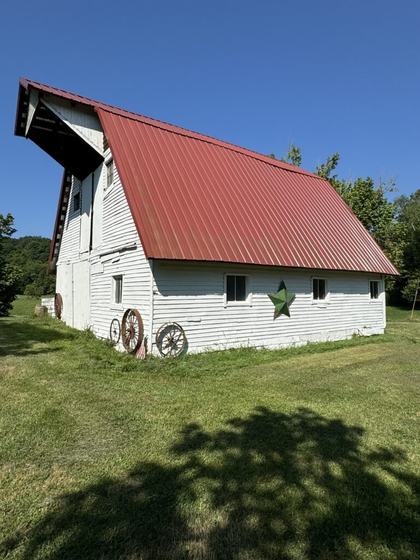
 Gambrel barn 2 photos
Letart, WV
Large White Barn with Amish-Installed Metal Roof
Make an offer Barn to move
Listed Nov 2024 Older listing
West Virginia's barns range from German bank barns in the Eastern Panhandle to the Mail Pouch barns of the Ohio Valley.
Barns posted by their owners, newest first. Most are sold to be taken down and moved. Click a barn for its photos, size, age and the seller's terms.
West Virginia farm real estate averaged $3,640 an acre in 2026, below the US average of $4,500, with pasture at $2,400. The Eastern Panhandle near Washington, DC costs most; the central and southern counties cost least.
Most West Virginia farms are hillside cattle and hay farms, and their barns are built into slopes or perched on narrow valley floors. Steep ground and narrow roads affect what it costs to repair or move a barn here more than in most states.
| Land type | West Virginia | US average |
|---|---|---|
| Farm real estate (land and buildings) | $3,640 | $4,500 |
| Cropland | $4,400 | $6,020 |
| Pasture | $2,400 | $2,000 |
| Change in farm real estate, 2025 to 2026 | +3.4% | +3.4% |
Source: USDA NASS, Land Values 2026 Summary, released July 31, 2026. West Virginia farm real estate is 19% below the US average.
Jefferson, Berkeley and Morgan counties were settled in the 1700s by Germans and Scots-Irish moving south through the Shenandoah Valley, and they have stone and frame bank barns much like Pennsylvania's.
This is the fastest-growing part of the state, within reach of Washington, so farms here cost much more than elsewhere in West Virginia.
The limestone valleys of Greenbrier and Monroe counties and the highlands of Pocahontas and Pendleton counties are cattle country, with log barns, frame barns and hay barns on large grassland farms.
Land here is moderately priced, and barns often come with sizable acreage.
Mail Pouch chewing tobacco was made in Wheeling, and barns painted with its ads are common along the old roads of the northern panhandle and the Ohio Valley. Mason and Jackson counties along the river have frame barns on bottomland and hill farms.
One listing on this site, a large white barn with a red metal roof near Letart in Mason County, comes from this region.
Our old barn inspection checklist covers the rest, and the guide to moving an old barn explains the costs if you plan to take one down and re-erect it.
Restoring a listed barn for business use may qualify for the 20% federal historic tax credit; see our barn tax credit guide.
Mostly in the northern panhandle and along the Ohio Valley, near Wheeling, where Mail Pouch chewing tobacco was made.
It can be. Steep ground and narrow roads limit trucks and cranes, so check access with the seller and a barn mover before you make an offer.
West Virginia farm real estate averaged $3,640 an acre in 2026, according to USDA. The Eastern Panhandle costs more; central and southern counties cost less.
List your West Virginia barn on OldBarnsForSale.net for free and reach buyers looking for old barns.
List Your Barn