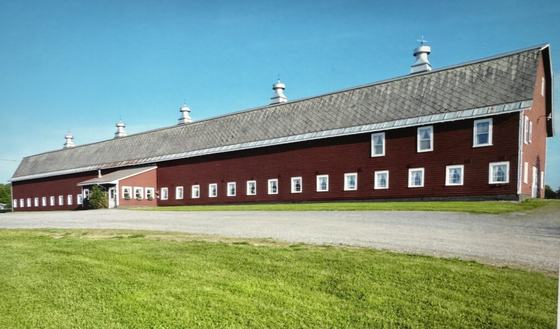
 Dairy barn 5 photos
Vergennes, VT
1932 Gambrel Dairy Barn, 45 x 225 (16,450 sq ft)
Built 1932 · 45 ft x 225 ft
$500,000 Barn to move
Listed Jun 2025 Older listing
Vermont runs the oldest state-funded barn grant program in the country, and its dairy history left barns in nearly every town.
Barns posted by their owners, newest first. Most are sold to be taken down and moved. Click a barn for its photos, size, age and the seller's terms.
Vermont farm real estate averaged $4,490 an acre in 2026, just under the US average of $4,500, with pasture at $2,920. Land is cheapest in the Northeast Kingdom and highest near Burlington and the ski towns.
The Division for Historic Preservation's Barn Preservation Grants, the oldest state-funded barn grant program in the United States, give one-to-one matching grants for repairing historic agricultural buildings; in 2025 they funded 23 projects with $373,026. Vermont's Current Use program also lowers property tax on enrolled farm and forest land, with a land use change tax if it is developed, so ask whether a farm is enrolled.
| Land type | Vermont | US average |
|---|---|---|
| Farm real estate (land and buildings) | $4,490 | $4,500 |
| Cropland | $4,450 | $6,020 |
| Pasture | $2,920 | $2,000 |
| Change in farm real estate, 2025 to 2026 | +2% | +3.4% |
Source: USDA NASS, Land Values 2026 Summary, released July 31, 2026. Vermont farm real estate is level with the US average.
Addison and Franklin counties along Lake Champlain have the state's best farmland and its largest dairy barns, including long gambrel barns from the early 1900s. Many dairies have closed or consolidated, leaving barns empty or converted.
One listing on this site, a 225-foot gambrel dairy barn from 1932 in Vergennes, comes from this region.
Orleans, Caledonia, Essex, Orange and Lamoille counties have hill farms with English barns, bank barns and connected farmsteads, plus a handful of round barns.
Farmland here is the most affordable in Vermont, and old barns often come with large acreage of hayfield and woodland.
Windham, Windsor, Bennington and Rutland counties were settled first, in the 1700s, and have some of the state's oldest timber-frame barns. Second-home demand around Woodstock, Manchester and the ski areas has turned many farms into country estates.
Old barns here are prized for conversion, but town zoning and Act 250 can apply to larger projects.
Our old barn inspection checklist covers the rest, and the guide to moving an old barn explains the costs if you plan to take one down and re-erect it.
Restoring a listed barn for business use may qualify for the 20% federal historic tax credit; see our barn tax credit guide.
Yes. The Division for Historic Preservation's Barn Preservation Grants offer one-to-one matching grants for historic agricultural buildings. Competition is strong, with roughly a third of applications funded.
A few. Vermont has only a handful of surviving round barns; most of its old barns are English barns, bank barns and gambrel dairy barns.
Vermont farm real estate averaged $4,490 an acre in 2026, according to USDA. The Northeast Kingdom costs less, and land near Burlington and the ski towns more.
List your Vermont barn on OldBarnsForSale.net for free and reach buyers looking for old barns.
List Your Barn