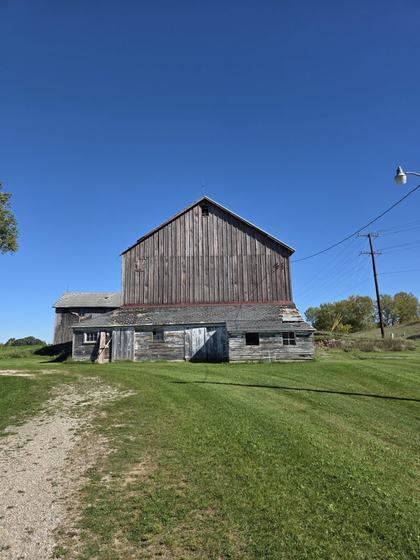
 Timber-frame barn 8 photos
Shiocton, WI
Late-1800s Timber-Frame Barn with Stone Foundation
Built late 1800s
Make an offer Barn to move
Listed Oct 2026
Michigan has one of the most active barn preservation communities in the country, and plenty of old dairy and bank barns still standing.
No Michigan barns are listed right now. Most barns below are sold to be taken down and moved, so buyers often look in nearby states.
Timber-frame barn 8 photos Shiocton, WI
Built late 1800s
Listed Oct 2026
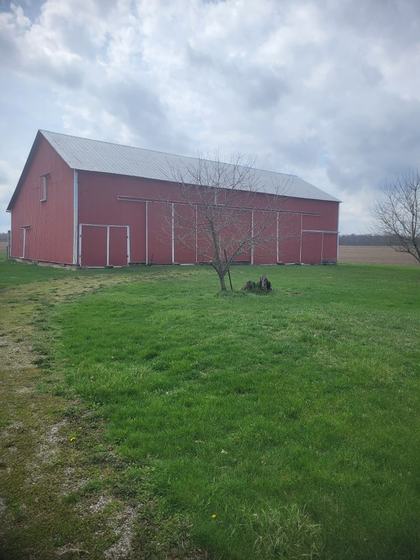 Timber-frame barn 8 photos
Van Wert, OH
Built 1867
Listed Jul 2026
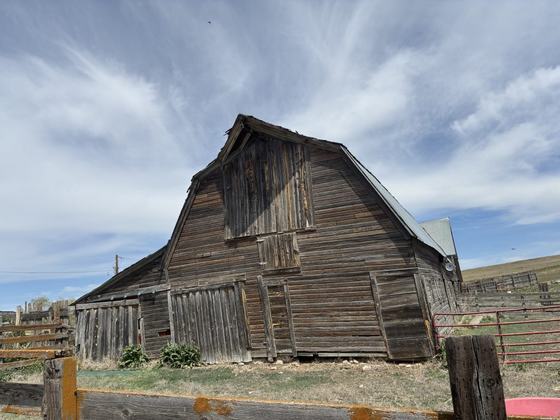 Gambrel cattle barn 8 photos
Box Elder, SD
Listed May 2026
Michigan farm real estate averaged $7,000 an acre in 2026, well above the US average of $4,500. Cropland averaged $6,600 and pasture $3,200, so farms with old barns in pasture and woodland country cost much less than the cash-crop counties of the south and the Thumb.
The Michigan Barn Preservation Network has worked to save the state's barns since the 1990s and gives a Barn of the Year award each year; the first, in 1997, went to the Octagon Barn near Gagetown in the Thumb. The network is a good place to find contractors who repair old barns.
| Land type | Michigan | US average |
|---|---|---|
| Farm real estate (land and buildings) | $7,000 | $4,500 |
| Cropland | $6,600 | $6,020 |
| Pasture | $3,200 | $2,000 |
| Change in farm real estate, 2025 to 2026 | +2.9% | +3.4% |
Source: USDA NASS, Land Values 2026 Summary, released July 31, 2026. Michigan farm real estate is 56% above the US average.
Huron, Tuscola and Sanilac counties, the Thumb, are flat, open farm country settled after the lumber era of the late 1800s. Their barns are large gambrel and gable barns for dairy cattle, hay and the region's dry beans.
Many Thumb barns now store equipment for large cash-crop farms, and those no longer needed are offered for removal. Wind off Lake Huron is hard on roofs and siding.
The southern tiers of counties were settled first, in the 1830s and 1840s, by farmers from New York and New England, and they hold Michigan's oldest barns: English barns and later basement or bank barns with stone foundations.
Washtenaw and Livingston counties near Ann Arbor carry suburban prices, while Lenawee, Hillsdale and Branch counties along the Ohio and Indiana lines are still mostly farm country.
Dutch settlers founded Holland in Ottawa County in 1847, and west Michigan's farms still show their dairy and poultry roots. Along the lakeshore, from Berrien north to Oceana and Leelanau, fruit farms have packing barns and storage barns for apples and cherries.
Lakeshore counties carry recreational prices, while inland farms in Kent, Allegan and Ottawa counties stay closer to farm value.
Our old barn inspection checklist covers the rest, and the guide to moving an old barn explains the costs if you plan to take one down and re-erect it.
Restoring a listed barn for business use may qualify for the 20% federal historic tax credit; see our barn tax credit guide.
The Michigan Barn Preservation Network is the main statewide group. It runs the Barn of the Year award, holds workshops and connects owners with contractors who repair old barns.
Michigan farm real estate averaged $7,000 an acre in 2026, according to USDA. Pasture and woodland farms cost much less per acre than cash-crop land in the south and the Thumb.
In the southern tiers of counties, settled in the 1830s and 1840s, where English barns and basement bank barns with stone foundations survive.
List your Michigan barn on OldBarnsForSale.net for free and reach buyers looking for old barns.
List Your Barn