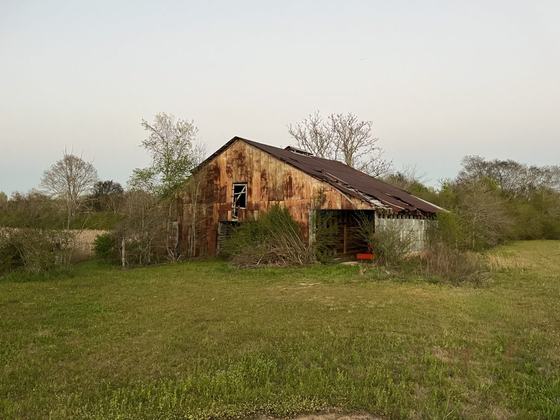
 Hay barn 8 photos
Plantersville, AL
40 x 60 Barn with a Sawn-Lumber Frame
40 ft x 60 ft, 40 ft tall
Best offer Barn to move
Listed Aug 2024 Older listing
Alabama's old barns follow its farm regions: log and frame barns in the Tennessee Valley, cotton-era buildings in the Black Belt and peanut and cotton barns in the Wiregrass.
Barns posted by their owners, newest first. Most are sold to be taken down and moved. Click a barn for its photos, size, age and the seller's terms.
Hay barn 8 photos Plantersville, AL
40 ft x 60 ft, 40 ft tall
Listed Aug 2024 Older listing
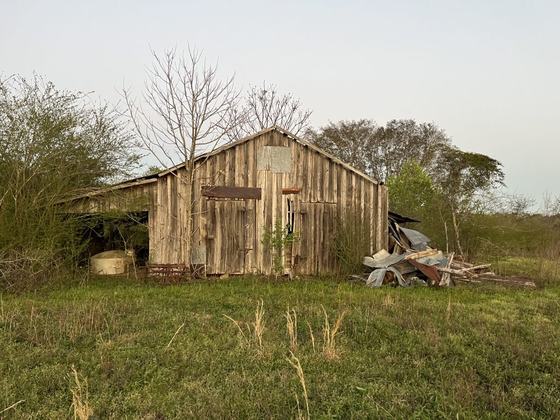 Small barn
Plantersville, AL
20 ft x 30 ft, 20 ft tall
Listed Aug 2024 Older listing
Alabama farm real estate averaged $4,250 an acre in 2026, up 2.4% in a year and a little below the US average of $4,500. Cropland averaged $4,650 and pasture $3,500, so rural land with an old barn costs less here than in most of the Southeast, apart from the Gulf Coast and the land around Huntsville and Birmingham.
Old barns in Alabama almost always sell with land. The state has few barn reclaimers compared with the Midwest, and most barns come up as part of a family farm, a hunting tract or a cattle operation. A barn buyer here is usually a land buyer first, and the county matters more than the building.
| Land type | Alabama | US average |
|---|---|---|
| Farm real estate (land and buildings) | $4,250 | $4,500 |
| Cropland | $4,650 | $6,020 |
| Pasture | $3,500 | $2,000 |
| Change in farm real estate, 2025 to 2026 | +2.4% | +3.4% |
Source: USDA NASS, Land Values 2026 Summary, released July 31, 2026. Alabama farm real estate is 6% below the US average.
The Tennessee River valley was settled in the early 1800s by farmers from Tennessee, Virginia and the Carolinas, and its barns follow Upland South practice. The oldest survivors are log cribs and double-crib barns of oak and poplar, followed by English-style frame barns and the larger general-purpose barns built when cotton and corn farming grew in the late 1800s.
Madison County around Huntsville has grown fast, and farmland there is priced as future housing. Limestone, Lawrence, Morgan and Marshall counties keep more working farms, and the Sand Mountain plateau in DeKalb and Jackson counties has small cattle and poultry farms where old barns still stand next to newer chicken houses.
The Black Belt is a crescent of dark prairie soil across central Alabama, through Sumter, Marengo, Hale, Perry, Dallas, Lowndes and Wilcox counties. It was the center of Alabama's antebellum cotton economy, and the farm buildings that survive here include cotton houses, mule barns, commissaries and large frame barns from the plantation and tenant-farming years.
Much of the old cropland is now cattle pasture, catfish ponds and timber, and land prices are among the lowest in the state. Historic farm buildings here usually come with large tracts or estates rather than as small barn properties, and many are in poor condition after decades without use.
The Wiregrass in the southeast corner of the state, around Dothan, Enterprise and Geneva, is peanut and cotton country, and its barns are mostly frame barns, peanut and equipment sheds and small tobacco barns from the early 1900s. They tend to be plainer than the barns of north Alabama, but land here sells at farm prices.
Baldwin County on the Gulf Coast is the exception to Alabama's low prices. Its farmland has some of the oldest farms near Mobile Bay, but demand from coastal housing pushes prices well above the state average, so a barn here is usually part of an expensive rural homesite.
Our old barn inspection checklist covers the rest, and the guide to moving an old barn explains the costs if you plan to take one down and re-erect it.
Restoring a listed barn for business use may qualify for the 20% federal historic tax credit; see our barn tax credit guide.
Alabama farm real estate averaged $4,250 an acre in 2026, according to USDA, with cropland at $4,650 and pasture at $3,500. Land near Huntsville, Birmingham and the Gulf Coast costs well above that, while Black Belt and Wiregrass farmland is usually below it.
The oldest surviving barns are mostly in north Alabama, where log crib and double-crib barns from the 1800s stand in the Tennessee Valley and on Sand Mountain. The Black Belt has cotton-era farm buildings, though many are in poor condition.
Contact the Alabama Historical Commission, the state historic preservation office, which keeps survey records and handles the Alabama Register and National Register listings. A county historical society can often add the farm's family history.
List your Alabama barn on OldBarnsForSale.net for free and reach buyers looking for old barns.
List Your Barn