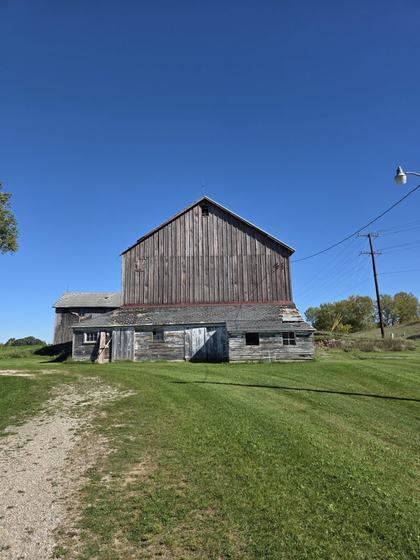
 Timber-frame barn 8 photos
Shiocton, WI
Late-1800s Timber-Frame Barn with Stone Foundation
Built late 1800s
Make an offer Barn to move
Listed Oct 2026
Illinois is known for round barns and big prairie barns, and with cropland over $10,000 an acre, many old barns are sold to be moved.
No Illinois barns are listed right now. Most barns below are sold to be taken down and moved, so buyers often look in nearby states.
Timber-frame barn 8 photos Shiocton, WI
Built late 1800s
Listed Oct 2026
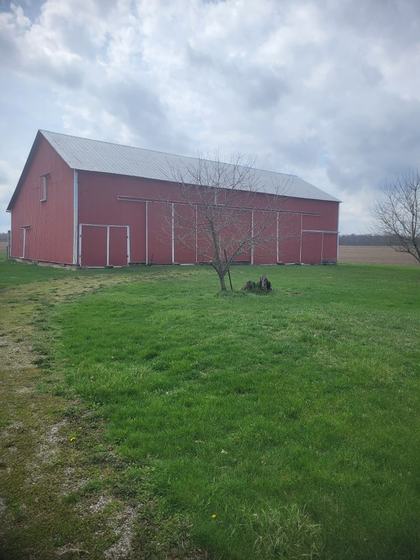 Timber-frame barn 8 photos
Van Wert, OH
Built 1867
Listed Jul 2026
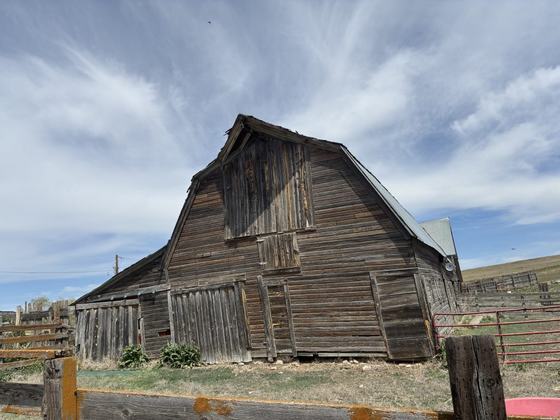 Gambrel cattle barn 8 photos
Box Elder, SD
Listed May 2026
Illinois farm real estate averaged $9,250 an acre in 2026, more than double the US average of $4,500, and cropland averaged $10,200. On land that valuable, an unused barn often stands in the way of farming, so many Illinois barns are sold for removal or given to anyone who will take them.
Illinois also has active barn preservation. Landmarks Illinois has given grants from its Preservation Heritage Fund to barns, including the Lewis Round Barn in Adams County, and lists threatened barns on its annual Most Endangered Historic Places list.
| Land type | Illinois | US average |
|---|---|---|
| Farm real estate (land and buildings) | $9,250 | $4,500 |
| Cropland | $10,200 | $6,020 |
| Pasture | $4,300 | $2,000 |
| Change in farm real estate, 2025 to 2026 | +3.6% | +3.4% |
Source: USDA NASS, Land Values 2026 Summary, released July 31, 2026. Illinois farm real estate is 106% above the US average.
The counties west of Chicago, such as DeKalb, Kane, McHenry, Boone and Ogle, were dairy country supplying the city, and their barns are large gambrel and gable dairy barns. Suburban growth has made many of them available for removal.
Jo Daviess County in the far northwest, around Galena, was settled during the 1820s and 1830s lead-mining boom, and its hilly farms have some of the state's oldest barns, including stone barns.
The flat prairie counties of central Illinois, such as Champaign, McLean, Livingston, Logan and Sangamon, built large frame barns for horses, cattle and hay from the 1870s to the 1920s. Round barns were promoted here in the early 1900s, and the University of Illinois built its own experimental round barns in Urbana.
With cropland among the most valuable in the country, these barns are frequently offered for removal.
Southern Illinois, settled from Kentucky and Tennessee, has smaller hill farms in Union, Johnson, Pope and Jackson counties, with log and frame barns and the packing sheds of Union County's orchards.
This is the cheapest part of the state for land with an old barn, and the wooded hills near the Shawnee National Forest attract recreational buyers.
Our old barn inspection checklist covers the rest, and the guide to moving an old barn explains the costs if you plan to take one down and re-erect it.
Restoring a listed barn for business use may qualify for the 20% federal historic tax credit; see our barn tax credit guide.
Landmarks Illinois has given Preservation Heritage Fund grants to threatened barns, such as the Lewis Round Barn in Adams County. Listed barns used for business may also qualify for historic tax credits through the state historic preservation office.
Illinois cropland averaged $10,200 an acre in 2026, according to USDA. An unused barn takes up valuable ground, so many owners sell barns for removal.
Round barns were built across central and northern Illinois in the early 1900s, and the University of Illinois built experimental round barns in Urbana. Others stand in western Illinois, such as the Lewis Round Barn in Adams County.
List your Illinois barn on OldBarnsForSale.net for free and reach buyers looking for old barns.
List Your Barn