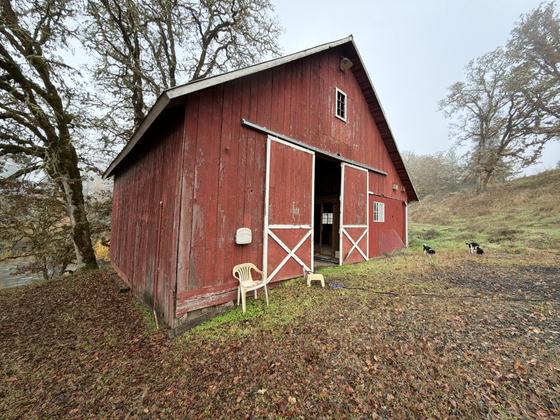
 Gable barn 5 photos
Lebanon, OR
Weathered 100-Year-Old Red Barn
About 100 years old
Make an offer Barn to move
Listed Nov 2026
Oregon has thousands of pre-1960 barns, from Oregon Trail settlers' barns in the Willamette Valley to log and frame ranch barns in the east.
Barns posted by their owners, newest first. Most are sold to be taken down and moved. Click a barn for its photos, size, age and the seller's terms.
Oregon farm real estate averaged $3,880 an acre in 2026, below the US average of $4,500, but pasture averaged only $1,120 because of the huge rangelands east of the Cascades. Willamette Valley farmland costs much more.
Oregon's land-use law matters more to barn buyers here than in most states. Most farmland is zoned Exclusive Farm Use, which strictly limits new houses and non-farm uses, so converting an old barn into a home or event space may not be allowed. Check the county's rules before you buy. Restore Oregon, a statewide nonprofit, estimates the state has about 11,400 barns built before 1960 and runs a Heritage Barns Taskforce to help owners keep them.
| Land type | Oregon | US average |
|---|---|---|
| Farm real estate (land and buildings) | $3,880 | $4,500 |
| Cropland | $4,540 | $6,020 |
| Pasture | $1,120 | $2,000 |
| Change in farm real estate, 2025 to 2026 | +2.6% | +3.4% |
Source: USDA NASS, Land Values 2026 Summary, released July 31, 2026. Oregon farm real estate is 14% below the US average.
Oregon Trail settlers claimed the Willamette Valley from the 1840s, and Linn, Marion, Polk, Yamhill and Benton counties have the state's oldest barns, many built of Douglas fir. The valley was also a major hop-growing region, and hop kilns and dryers still stand around Independence and in Marion County.
Linn County is grass-seed country today, and old barns there often sit on large seed farms. One listing on this site, a red barn near Lebanon, comes from this region.
The Wallowa Valley, the Grande Ronde Valley and the ranch country of Baker, Grant and Harney counties have log and frame ranch barns, hay barns and stock sheds built for cattle and sheep.
Land is cheap per acre but often sold in large tracts, and water rights matter as much as the buildings.
The Rogue Valley around Medford is pear and orchard country, and Jackson, Josephine and Douglas counties have orchard barns, packing sheds and small ranch barns.
Wildfire risk is a real concern here: ask about defensible space and insurance before you buy a barn surrounded by dry grass or timber.
Our old barn inspection checklist covers the rest, and the guide to moving an old barn explains the costs if you plan to take one down and re-erect it.
Restoring a listed barn for business use may qualify for the 20% federal historic tax credit; see our barn tax credit guide.
Often not easily. Most Oregon farmland is zoned Exclusive Farm Use, which limits new dwellings and non-farm uses. Check with the county planning department before buying a barn for conversion.
Restore Oregon estimates about 11,400 barns built before 1960 still stand in the state.
Oregon farm real estate averaged $3,880 an acre in 2026, according to USDA. Willamette Valley land costs much more, eastern Oregon rangeland much less.
List your Oregon barn on OldBarnsForSale.net for free and reach buyers looking for old barns.
List Your Barn