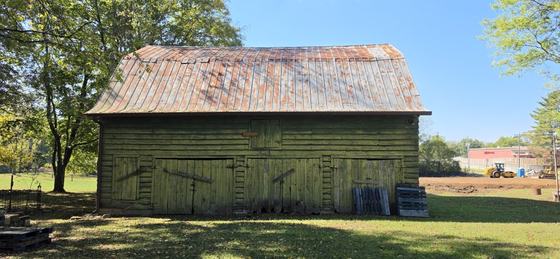
 Gambrel barn 7 photos
Monteagle, TN
Church-Owned Gambrel Barn on the Cumberland Plateau
Make an offer Barn to move
Listed Oct 2026
Most of Oklahoma was opened to homesteading only in 1889 and the 1890s, so its old barns are younger than the East's, but they are plentiful and affordable.
No Oklahoma barns are listed right now. Most barns below are sold to be taken down and moved, so buyers often look in nearby states.
Gambrel barn 7 photos Monteagle, TN
Listed Oct 2026
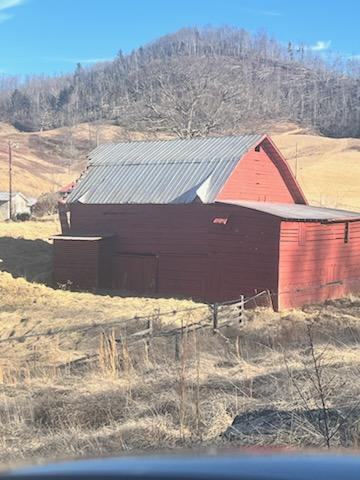 Gable barn 6 photos
Bakersville, NC
Built c. 1900
Listed Aug 2026
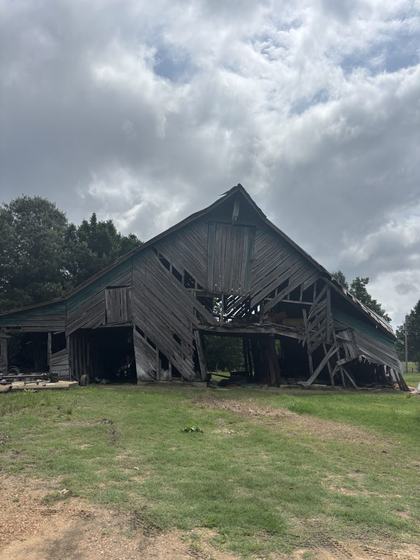 Gable barn 8 photos
Wynne, AR
Listed May 2026
Oklahoma farm real estate averaged $2,620 an acre in 2026, well under the US average of $4,500, which makes it one of the more affordable states to buy land with an old barn. Pasture averaged $2,200 an acre and cropland $2,560.
The state's barns date mostly from the Land Run era of 1889 to statehood in 1907 and the farm boom that followed. The best-known survivor is the Arcadia Round Barn, built in 1898 on what became Route 66 and the only wooden round barn in Oklahoma, but most old Oklahoma barns are plain frame barns, hay barns and stone or frame ranch barns.
| Land type | Oklahoma | US average |
|---|---|---|
| Farm real estate (land and buildings) | $2,620 | $4,500 |
| Cropland | $2,560 | $6,020 |
| Pasture | $2,200 | $2,000 |
| Change in farm real estate, 2025 to 2026 | +3.1% | +3.4% |
Source: USDA NASS, Land Values 2026 Summary, released July 31, 2026. Oklahoma farm real estate is 42% below the US average.
The counties opened in the 1889 Land Run and the runs that followed, such as Logan, Lincoln, Payne and Oklahoma counties, were divided into 160-acre homesteads, and many of those quarter sections still have a frame barn from the 1900s to the 1920s.
Growth around Oklahoma City, Edmond and Stillwater has turned some of these farms into acreage homesites, so barns close to the cities sell at homesite prices while those further out come with working pasture.
The wooded hills of northeastern Oklahoma, much of it within the Cherokee Nation, have smaller farms with barns closer to Ozark and Upland South patterns: smaller frame barns, log outbuildings on the oldest places, and stone foundations from local sandstone and limestone.
Lake and river frontage around Grand Lake and Tenkiller raise land prices, while upland pasture away from the water stays affordable.
West of Interstate 35 the land turns to wheat and cattle. Barns here are large hay and equipment barns, and some ranch headquarters have stone barns and outbuildings built from local rock.
Farm real estate is cheapest in the west and the Panhandle, and old barns there often come with large acreage. Wind is the main enemy: check for racked frames and missing roof sheathing.
Our old barn inspection checklist covers the rest, and the guide to moving an old barn explains the costs if you plan to take one down and re-erect it.
Restoring a listed barn for business use may qualify for the 20% federal historic tax credit; see our barn tax credit guide.
Most date from the 1890s to the 1930s, because most of the state was opened to homesteading in 1889 and the years after. Older log buildings survive in parts of eastern Oklahoma.
Compared with most states, yes. Oklahoma farm real estate averaged $2,620 an acre in 2026, according to USDA, against a US average of $4,500. Land near Oklahoma City and Tulsa or on lakes costs more.
Yes. The Arcadia Round Barn on Route 66, begun in 1898, is the only wooden round barn in Oklahoma and is listed on the National Register. It is a museum, not for sale.
List your Oklahoma barn on OldBarnsForSale.net for free and reach buyers looking for old barns.
List Your Barn