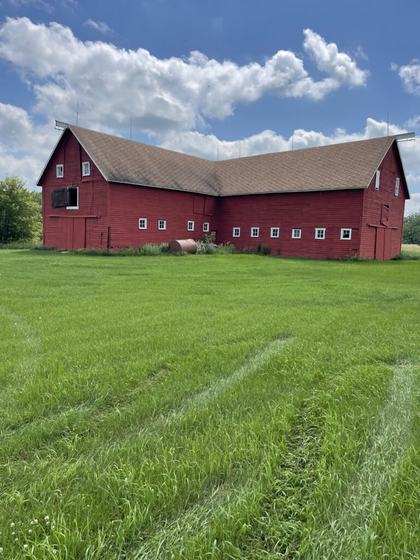
 L-shaped barn
Wolverton, MN
1903 L-Shaped Barn on a Family Homestead
Built 1903
Best offer Barn to move
Listed Aug 2025 Older listing
Minnesota's dairy and wheat farms left thousands of big gambrel barns, and many now stand empty on farms that sold their herds.
Barns posted by their owners, newest first. Most are sold to be taken down and moved. Click a barn for its photos, size, age and the seller's terms.
Minnesota farm real estate averaged $6,950 an acre in 2026, well above the US average of $4,500, driven by cropland at $7,300 an acre in the southern corn and soybean counties. Pasture averaged only $2,400 an acre, and farms with old barns in the wooded central and northern counties sell for much less than the corn belt.
Most old Minnesota barns are gambrel or gable dairy barns built between the 1890s and the 1930s, with a stone or concrete ground floor for cows and a huge hay mow above. As small dairies closed, many of these barns lost their purpose, which is why so many come up for sale or for removal.
| Land type | Minnesota | US average |
|---|---|---|
| Farm real estate (land and buildings) | $6,950 | $4,500 |
| Cropland | $7,300 | $6,020 |
| Pasture | $2,400 | $2,000 |
| Change in farm real estate, 2025 to 2026 | +2.4% | +3.4% |
Source: USDA NASS, Land Values 2026 Summary, released July 31, 2026. Minnesota farm real estate is 54% above the US average.
The driftless bluff country along the Mississippi, in Fillmore, Houston, Winona, Wabasha and Goodhue counties, was never flattened by glaciers, and its farms sit in narrow valleys and on ridges. Barns here are older on average than elsewhere in the state, and many have limestone foundations from local quarries.
Amish families have settled around Harmony and Canton in Fillmore County, and some old barns there are kept in use with traditional methods.
Stearns County and its neighbors were settled largely by German Catholic farmers, and the area became one of the densest dairy regions in the state. Gambrel dairy barns with round or tile silos are everywhere, many on farms that have been in the same family for more than a century.
Lake country to the north and west, around Otter Tail and Douglas counties, mixes farms with lake homes, so barns near the water carry recreational prices.
The flat, rich Red River Valley along the North Dakota line was settled for wheat in the 1870s and 1880s. Its barns were built for draft horses and hay, and they tend to be large, plain and exposed to the wind on open prairie.
Farmland values here are high for cropland, but farmsteads with an old barn are often split off and sold with a few acres. One listing on this site, a 1903 L-shaped barn near Wolverton in Wilkin County, is a good example.
Our old barn inspection checklist covers the rest, and the guide to moving an old barn explains the costs if you plan to take one down and re-erect it.
Restoring a listed barn for business use may qualify for the 20% federal historic tax credit; see our barn tax credit guide.
Most were built for small dairy farms between the 1890s and 1930s. As those dairies closed, the barns lost their use, and owners now sell them with farmsteads or let buyers take them down and move them.
Minnesota farm real estate averaged $6,950 an acre in 2026, according to USDA, and cropland averaged $7,300. Farmsteads split off from cropland, and land in the wooded central and northern counties, usually cost less per acre.
Yes. Many owners sell barns for removal so they can farm the ground. Plan for a crew to dismantle the frame, a new foundation, and the seller's terms on clean-up and insurance.
List your Minnesota barn on OldBarnsForSale.net for free and reach buyers looking for old barns.
List Your Barn