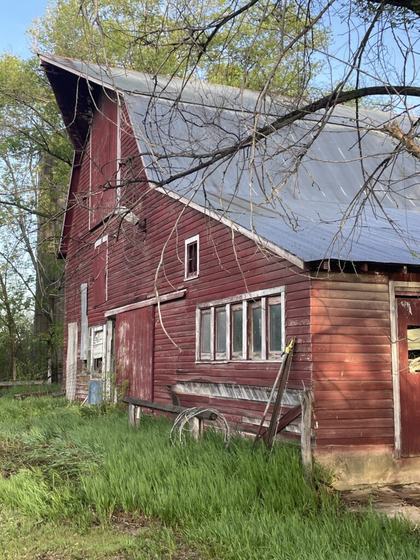
 Dairy barn 8 photos
Abilene, KS
50 x 70 Milk Barn, 35 Feet Tall
50 ft x 70 ft, 35 ft tall
Make an offer Barn to move
Listed May 2025 Older listing
Kansas is known for its stone barns, from the post rock limestone barns of the Smoky Hills to the big ranch barns of the Flint Hills.
Barns posted by their owners, newest first. Most are sold to be taken down and moved. Click a barn for its photos, size, age and the seller's terms.
Kansas farm real estate averaged $3,200 an acre in 2026, well below the US average of $4,500. Cropland averaged $3,540, and pasture rose fastest, up 5.7% to $2,400 an acre, as cattle ranches stayed in demand.
With little timber on the plains, Kansas settlers often built with stone. In north-central Kansas, a layer of limestone soft enough to cut but hard when exposed became known as post rock, used for fence posts, barns and houses. The Kansas Historical Society has surveyed barns across the state, and its records are a good starting point for dating a Kansas barn.
| Land type | Kansas | US average |
|---|---|---|
| Farm real estate (land and buildings) | $3,200 | $4,500 |
| Cropland | $3,540 | $6,020 |
| Pasture | $2,400 | $2,000 |
| Change in farm real estate, 2025 to 2026 | +3.2% | +3.4% |
Source: USDA NASS, Land Values 2026 Summary, released July 31, 2026. Kansas farm real estate is 29% below the US average.
Lincoln, Russell, Ellsworth, Mitchell and Rush counties are Post Rock Country, and Lincoln County calls itself the post rock capital of Kansas. Barns, houses, churches and bridges here were built of the same limestone as the fence posts that line the roads.
Stone barns last well but need their mortar and roof framing checked. Land here is among the most affordable in the state.
The Flint Hills have the largest remaining tallgrass prairie in North America, and their ranches built big stone barns. The best known is the 1881 limestone barn at Spring Hill Ranch, now part of the Tallgrass Prairie National Preserve in Chase County.
Ranches here sell as grazing land, and pasture values have been rising faster than cropland.
Eastern Kansas was settled first, in the 1850s, and Leavenworth, Douglas, Jefferson and Franklin counties have the state's oldest frame and stone barns. Farther west, Dickinson County around Abilene has large frame dairy and hay barns; one, a 50 by 70 foot milk barn, is listed on this site.
Land near Kansas City and Lawrence carries suburban prices, while the north-central counties stay close to farm value.
Our old barn inspection checklist covers the rest, and the guide to moving an old barn explains the costs if you plan to take one down and re-erect it.
Restoring a listed barn for business use may qualify for the 20% federal historic tax credit; see our barn tax credit guide.
A barn built of fence-post limestone, a layer of rock in north-central Kansas that settlers quarried for fence posts and buildings. Lincoln County calls itself the post rock capital of Kansas.
Kansas farm real estate averaged $3,200 an acre in 2026, according to USDA, with cropland at $3,540 and pasture at $2,400.
The 1881 limestone barn at Spring Hill Ranch in the Tallgrass Prairie National Preserve, near Strong City in Chase County, is open to visitors.
List your Kansas barn on OldBarnsForSale.net for free and reach buyers looking for old barns.
List Your Barn