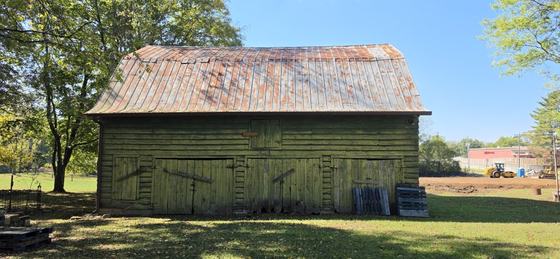
 Gambrel barn 7 photos
Monteagle, TN
Church-Owned Gambrel Barn on the Cumberland Plateau
Make an offer Barn to move
Listed Oct 2026
Kentucky's black tobacco barns are among the best-known barns in America, and thousands stand empty since the end of the tobacco program.
No Kentucky barns are listed right now. Most barns below are sold to be taken down and moved, so buyers often look in nearby states.
Gambrel barn 7 photos Monteagle, TN
Listed Oct 2026
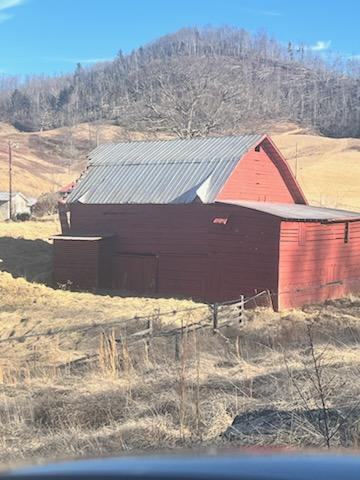 Gable barn 6 photos
Bakersville, NC
Built c. 1900
Listed Aug 2026
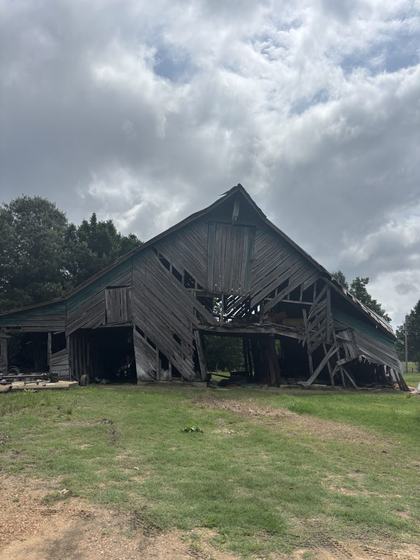 Gable barn 8 photos
Wynne, AR
Listed May 2026
Kentucky farm real estate averaged $5,600 an acre in 2026, above the US average of $4,500, with cropland at $6,630 and pasture at $4,050. Bluegrass horse farms cost far more; eastern and southern Kentucky cost far less.
Kentucky grew more burley tobacco than any other state for most of the 1900s, and almost every farm in the central and northern counties had an air-cure tobacco barn, many painted black. Since the federal tobacco quota buyout in 2004, most of those barns have lost their use, and they are now offered with farms, converted or sold for their wood.
| Land type | Kentucky | US average |
|---|---|---|
| Farm real estate (land and buildings) | $5,600 | $4,500 |
| Cropland | $6,630 | $6,020 |
| Pasture | $4,050 | $2,000 |
| Change in farm real estate, 2025 to 2026 | +2.2% | +3.4% |
Source: USDA NASS, Land Values 2026 Summary, released July 31, 2026. Kentucky farm real estate is 24% above the US average.
Fayette, Woodford, Bourbon, Scott and Clark counties around Lexington are thoroughbred country, with horse barns, stallion barns and dry-laid stone fences on farms that sell at the highest prices in the state.
Older tobacco and stock barns also stand on these farms, and some are converted into event spaces near the distilleries of the Bourbon Trail.
The rolling counties around the Bluegrass, such as Harrison, Mason, Shelby, Henry and Owen, were the heart of burley country. Their tobacco barns are large frame barns with hinged vertical boards that open to let air through the hanging leaf, and many are painted black.
Land here is cheaper than in the Inner Bluegrass, and barns are plentiful.
Christian, Todd, Trigg, Calloway and Graves counties grow dark tobacco, cured over smoldering fires in tall, tight barns with smoke-blackened interiors. The region was the scene of the Black Patch Tobacco Wars of 1904 to 1908.
Dark tobacco is still grown here, so some barns remain in use, while others are sold with farms at prices below the state average.
Our old barn inspection checklist covers the rest, and the guide to moving an old barn explains the costs if you plan to take one down and re-erect it.
Restoring a listed barn for business use may qualify for the 20% federal historic tax credit; see our barn tax credit guide.
Most black barns are burley tobacco barns. The practice is linked to the cheap creosote-based coatings farmers once used and to helping the barn hold heat while the leaf cures.
Yes. Since the 2004 quota buyout many tobacco barns have stood empty, and owners sell them with farms or offer them for removal and their wood.
Kentucky farm real estate averaged $5,600 an acre in 2026, according to USDA. Bluegrass horse farms cost far more; eastern and southern Kentucky cost less.
List your Kentucky barn on OldBarnsForSale.net for free and reach buyers looking for old barns.
List Your Barn