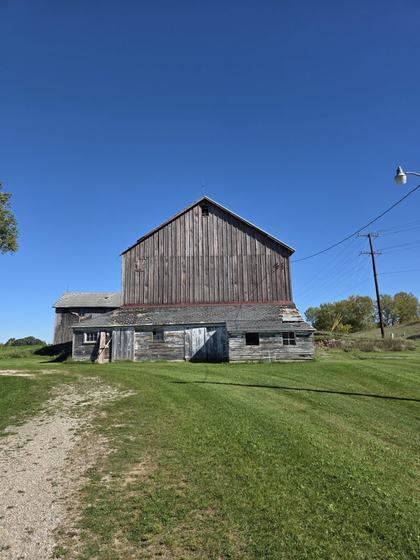
 Timber-frame barn 8 photos
Shiocton, WI
Late-1800s Timber-Frame Barn with Stone Foundation
Built late 1800s
Make an offer Barn to move
Listed Oct 2026
Iowa has the most valuable cropland in the Corn Belt and one of the country's strongest barn foundations, which funds restorations and runs huge barn tours.
No Iowa barns are listed right now. Most barns below are sold to be taken down and moved, so buyers often look in nearby states.
Timber-frame barn 8 photos Shiocton, WI
Built late 1800s
Listed Oct 2026
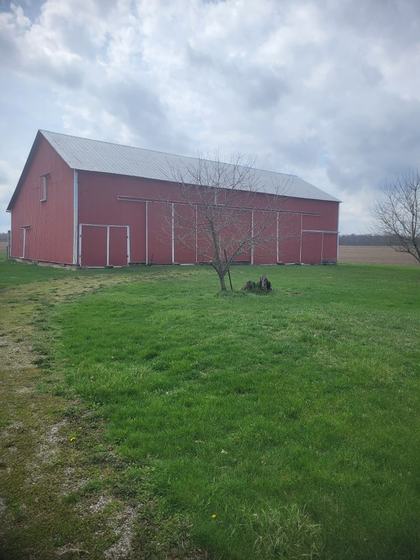 Timber-frame barn 8 photos
Van Wert, OH
Built 1867
Listed Jul 2026
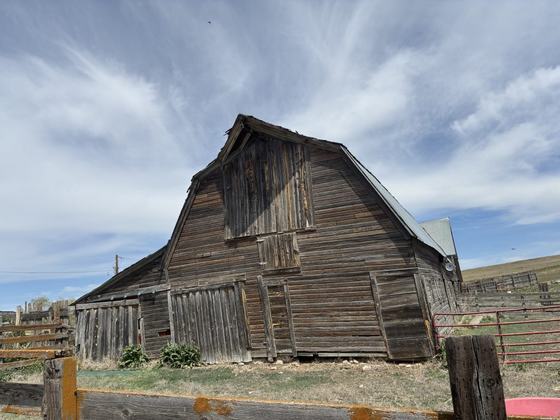 Gambrel cattle barn 8 photos
Box Elder, SD
Listed May 2026
Iowa farm real estate averaged $10,100 an acre in 2026, the highest of any Corn Belt state, with cropland at $10,700. On land that valuable, unused barns are often removed, so many are offered for salvage or relocation.
The Iowa Barn Foundation works against that trend. It gives matching restoration grants of up to 50% of a project's cost, and its All-State Barn Tour, held for the 26th time in September 2026, opens more than 100 restored barns to the public.
| Land type | Iowa | US average |
|---|---|---|
| Farm real estate (land and buildings) | $10,100 | $4,500 |
| Cropland | $10,700 | $6,020 |
| Pasture | $3,800 | $2,000 |
| Change in farm real estate, 2025 to 2026 | +3.2% | +3.4% |
Source: USDA NASS, Land Values 2026 Summary, released July 31, 2026. Iowa farm real estate is 124% above the US average.
Allamakee, Winneshiek, Clayton and Fayette counties lie in the unglaciated Driftless Area, with wooded bluffs and valley farms. Norwegian settlers around Decorah and German settlers elsewhere built bank barns and stone buildings of local limestone.
Farms here have more pasture and woodland than the rest of Iowa, so land costs less per acre.
The flat, rich farmland of central and eastern Iowa has big gable and gambrel barns built for horses, cattle and hay before 1940, plus round barns built in the early 1900s.
In Iowa County, the seven villages of the Amana Colonies, founded by German communal settlers in the 1850s, keep historic barns and farm buildings, many now in commercial use.
The Loess Hills along the Missouri River in Harrison, Monona and Pottawattamie counties are steep hills of wind-blown soil found almost nowhere else in the world. Farms here have smaller barns set into the hills.
Land is cheaper in the hills than on the flat cropland to the east.
Our old barn inspection checklist covers the rest, and the guide to moving an old barn explains the costs if you plan to take one down and re-erect it.
Restoring a listed barn for business use may qualify for the 20% federal historic tax credit; see our barn tax credit guide.
Yes. The Iowa Barn Foundation gives matching grants of up to 50% of a restoration project's cost, and recognizes owners who restore barns with their own money.
The Iowa Barn Foundation's All-State Barn Tour is held each September; in 2026 it ran September 19 and 20 with more than 100 barns. The foundation also runs a spring tour in one region.
Iowa farm real estate averaged $10,100 an acre in 2026, according to USDA, the highest in the Corn Belt, with cropland at $10,700.
List your Iowa barn on OldBarnsForSale.net for free and reach buyers looking for old barns.
List Your Barn